On Water

Yesterday I reprised a habit I’d nearly unlearned: when arriving in a new city, first find the water. I’m on my own and reliant on my feet and busses while here. My hectic first few days had spun my inner compass sideways, so it was time to get oriented. What better way than to use the waterfront?
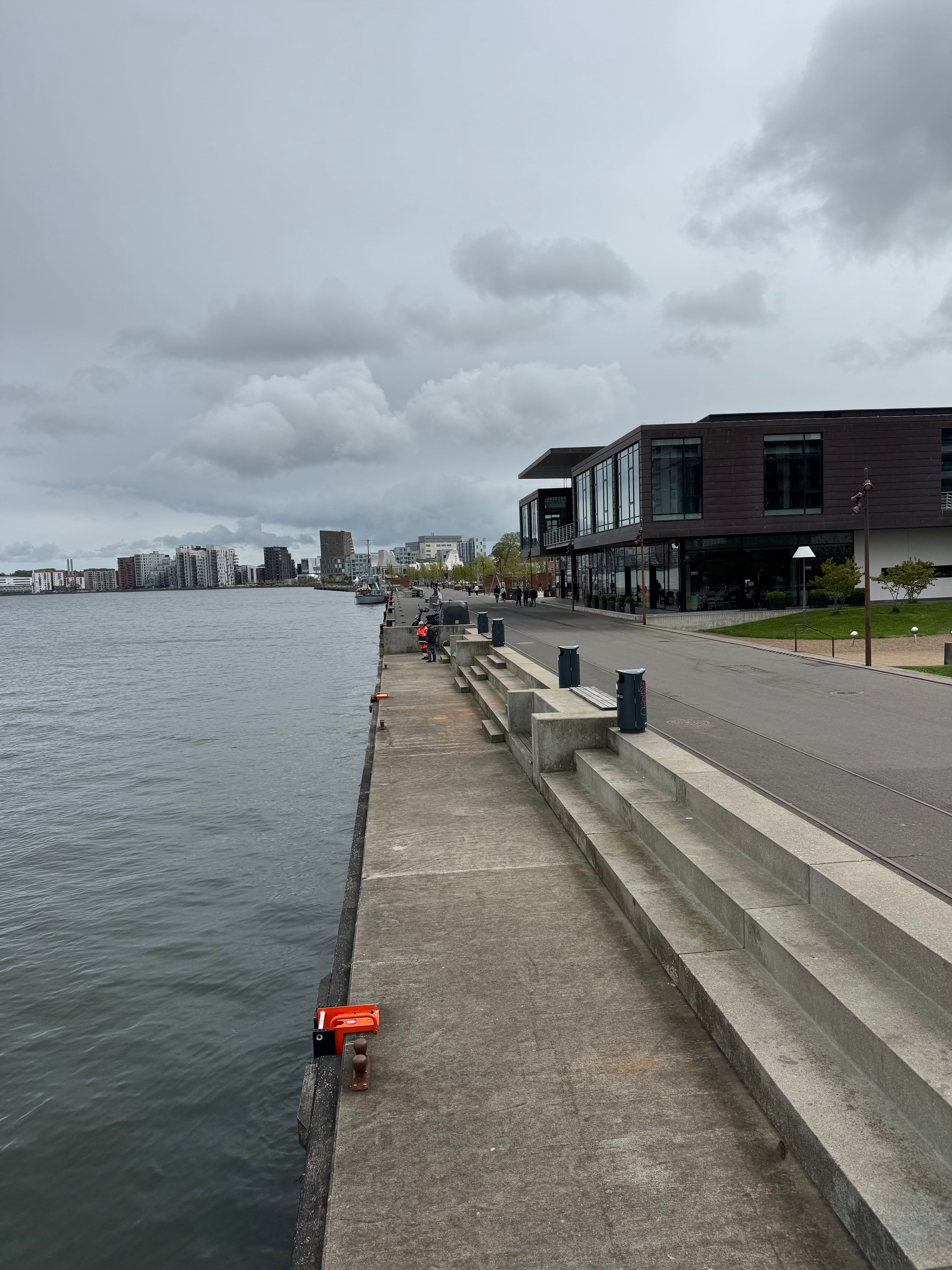
Aalborg is hardly a large city - the town itself has a population around 120,000 - though it is the fourth largest city in Denmark. Located over 400 km northwest of Copenhagen, it sits on the Limfjord, which connects to the Kattegat to the east. Aalborg has a rich history in shipbuilding, and today hosts the Port of Aalborg (outside of town) - a major “inland” port and one of the world’s leading offshore wind hubs. I’ll make my way to the Port eventually…but this weekend I am learning the old city. And so, reminiscent of Melville (“circumambulate the city”), I walked the length of Aalborg’s waterfront: from the Musikkens Hus (Music House), past the Aalborg University building where my office is, past museums and parks and restaurants (all set far back from the water), through marinas and the Maritime Experience Center, to the Marina Fjordparken.
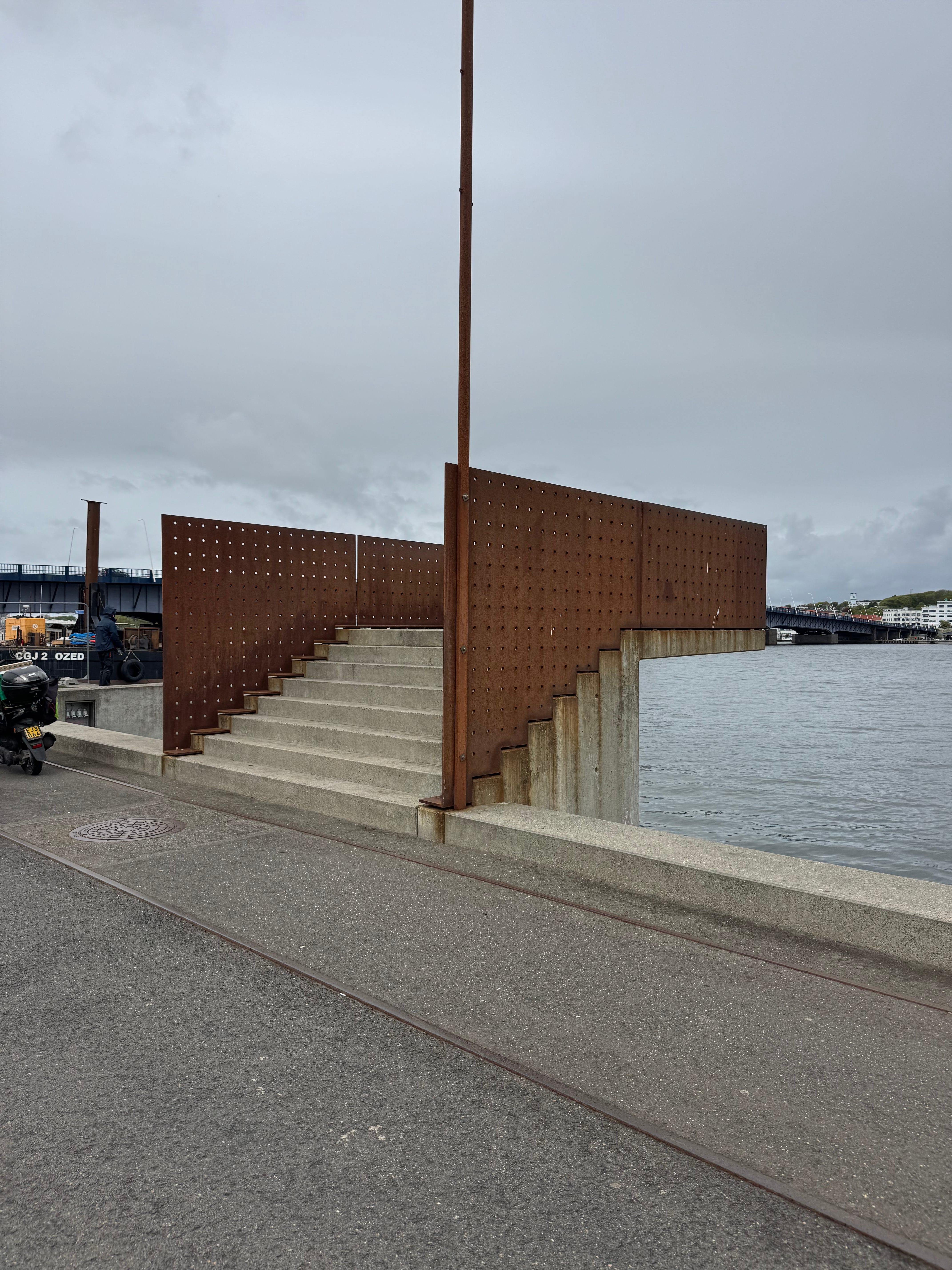
Aalborg reminds me of my grad school years learning about waterfront planning and development. In many ways, its post-industrial waterfront is no different than that of Providence or Portland. Shipbuildings have left, manufacturing has vacated waterfront mill buildings, recreation is on the rise. In so many U.S. locations this has meant condos and hotels, blocking access - physical or visual - to the city’s former lifeblood. Yet here this has meant sleek, Scandinavian water-oriented design. Steps invite us to the water. A viewing platform enables visitors to step out over the water and view traffic along the Limfjord. Yes, I’ve begun seeing design like this in some U.S. waterfront areas - but far too little, and in many cases too late.
But here is my absolute favorite discovery, the likes of which I’ve never seen before: the Vestre Fjordpark, an outdoor swimming park right in the city. The tall structure in the image is a swim platform. This “swimming bath” is evidently quite popular even in colder weather - I saw a few swimmers on this blustery Saturday.
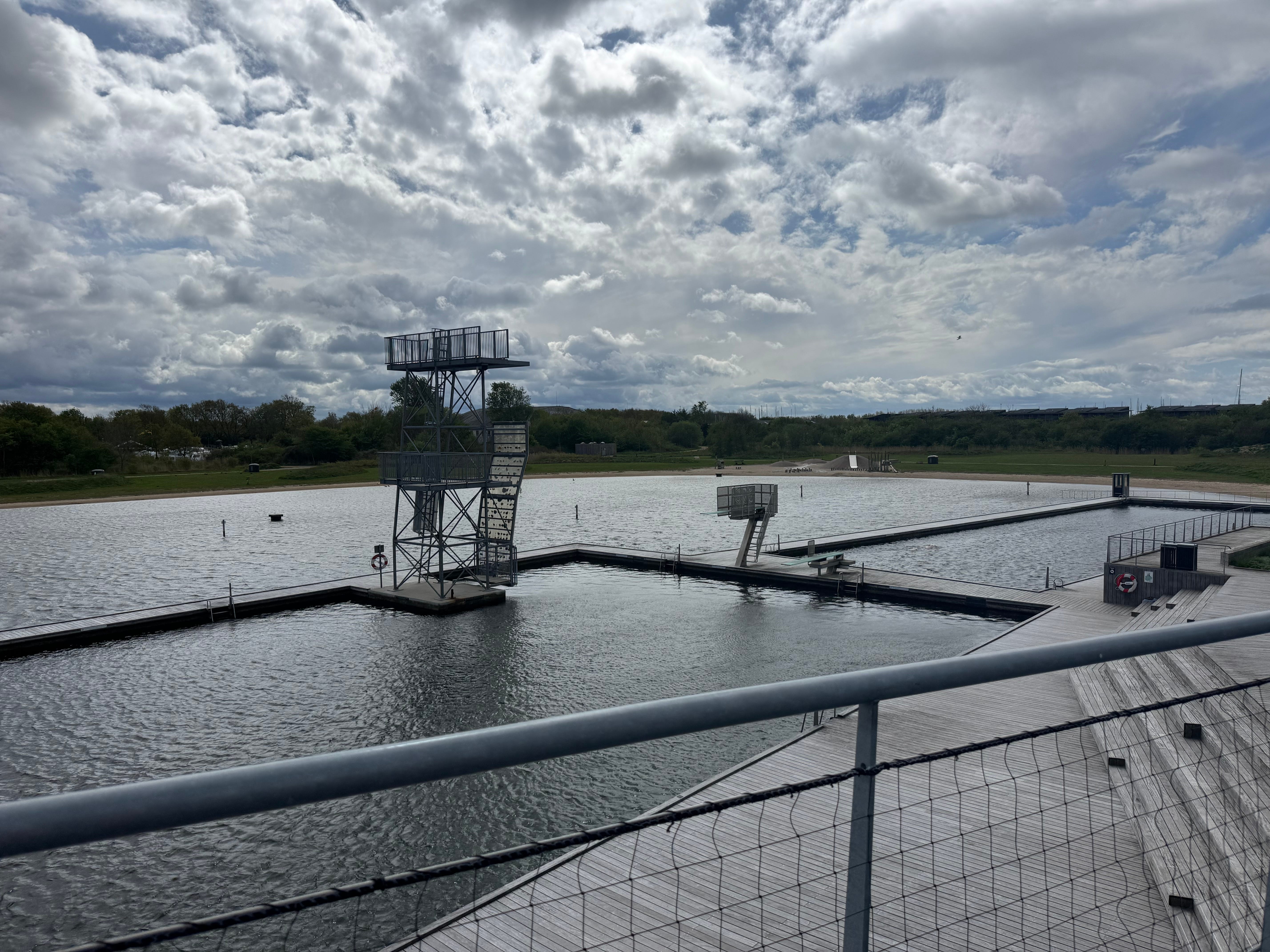
What can we take from this? Well, an urban swimming park is only possible through strong environmental management (water quality) and innovative waterfront planning and design. At home we are turning our back on the former, though I hope the latter will survive.
Yet there is a third ingredient, which is what drew me to Scandinavia in the first place: a water orientation. Do we face the water or do we turn away? Do we build steps and platforms, or fences and wall-like buildings? Are we clear-eyed about challenges like floods and storms, or do we pretend, a la Hans Christian Andersen (a Danish hero), that the emperor is fully clothed? Do we see the sea at all?
I am quickly falling in love with Aalborg. My waterfront tour has made me miss the earlier days of my marine affairs career, when I focused on local coastal and waterfront planning and development. Good inspiration for further exploration here in Denmark. Yet I wonder - how can I rekindle a local, community-oriented focus in the next phase of my professional life? I spend too much time lately thinking that it’s too late (for pretty much anything). Maybe it’s time for an attitude change.